
Why MSME Manufacturers Must Shift Towards Biodegradable Packaging Solutions
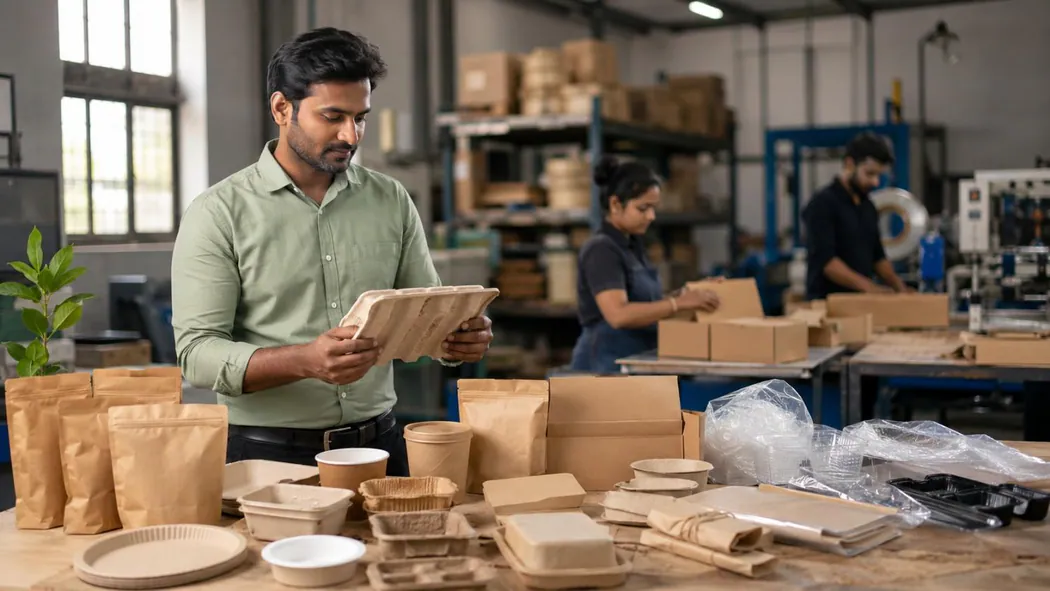
Quick Answer
MSME manufacturers should shift towards biodegradable packaging because it helps reduce plastic dependency, improves brand trust, supports regulatory readiness, and makes businesses more attractive to eco-conscious customers and large corporate buyers. However, MSMEs should choose certified materials, check cost impact, and plan proper disposal before making the switch.
Introduction to Biodegradable Packaging for MSMEs
Sustainability is no longer just a trend for businesses. It is becoming an important part of how customers, governments, and large companies evaluate brands and suppliers. For MSME manufacturers, packaging is one area where a small change can create a strong long-term impact.
Many MSMEs still depend on traditional plastic packaging such as LDPE and other single-use plastic materials. These options may be cheaper in the short term, but they create long-term environmental concerns and may become a business risk as regulations and buyer expectations continue to change.
This is why biodegradable and eco-friendly packaging solutions are becoming more relevant for Indian MSME manufacturers. The shift is not only about protecting the environment. It is also about building customer trust, improving brand value, preparing for compliance, and staying competitive in tomorrow's market.
What Is Biodegradable Packaging?
Biodegradable packaging refers to packaging materials that are designed to break down naturally under suitable environmental conditions. These materials may be made from plant-based, paper-based, compostable, or other eco-friendly alternatives.
However, MSMEs should understand one important point: not every biodegradable or compostable material breaks down quickly in normal conditions. The actual breakdown depends on the material type, certification, disposal method, and composting environment.
So, instead of choosing any product labelled "eco-friendly," manufacturers should work with verified suppliers and certified packaging materials.
Why Traditional Plastic Packaging Is Becoming a Challenge
Traditional plastic packaging is widely used because it is low-cost, flexible, lightweight, and easily available. But it also creates serious environmental problems because many plastic materials take a very long time to break down.
For manufacturers, plastic packaging is also becoming a business challenge. Customers are becoming more aware of environmental issues. Governments are tightening plastic waste rules. Large buyers and corporate clients are also giving more preference to suppliers who follow responsible and sustainable practices.
This means MSMEs that continue using outdated packaging may face pressure in the future. On the other hand, manufacturers that move early towards better packaging solutions can gain a stronger market position.
Why MSMEs Should Shift to Biodegradable Packaging
For MSME manufacturers, biodegradable packaging is not just an environmental choice. It is a smart business move.
Using sustainable packaging can help MSMEs:
- Reduce dependence on traditional plastic
- Improve brand image
- Build customer trust
- Support future compliance needs
- Attract eco-conscious buyers
- Improve chances of working with larger companies
- Show commitment to responsible manufacturing
Today's customers do not only look at product quality. They also notice how the product is packaged. A clean, responsible, and sustainable packaging approach can make a brand look more trustworthy and modern.
Business Benefits of Biodegradable Packaging for MSMEs
The biggest benefit of biodegradable packaging is that it helps MSMEs create a positive brand image. Customers are more likely to trust businesses that show responsibility towards the environment.
It can also help manufacturers stand out in competitive markets. If two products are similar in quality and price, eco-friendly packaging can become a strong deciding factor for customers.
For B2B manufacturers, the benefit can be even bigger. Many large corporations, exporters, retailers, and multinational companies prefer suppliers who follow Environmental, Social, and Governance practices. MSMEs that use sustainable packaging may look more suitable for such business partnerships.
Compliance and Regulatory Readiness
Plastic packaging rules in India are becoming stricter and more specific. The Ministry of Environment, Forest and Climate Change notified the Plastic Waste Management (Amendment) Rules, 2026 (G.S.R. 237(E), dated 31 March 2026), which tightens Extended Producer Responsibility (EPR) obligations for plastic packaging producers, importers, and brand owners under the Central Pollution Control Board (CPCB) framework.
The 2026 amendment introduces progressive minimum recycled-content targets by packaging category — for example, rigid plastic packaging must use 30% recycled content in FY 2025–26, rising to 40% by FY 2026–27, 50% by FY 2027–28, and 60% from FY 2028–29 onward, with lower staged targets for flexible and multi-layered packaging. It also sets rising reuse obligations, including for rigid packaging and drinking-water packaging. This means producers, importers, and brand owners — including MSME manufacturers who sell under their own brand — may have direct responsibilities under these rules depending on their business activity and packaging use.
Separately, India's 2022 ban on identified single-use plastic items (such as plastic cutlery, straws, and thin carry bags below prescribed micron limits) remains in force. For compostable plastic packaging, MSMEs should check whether the material has proper certification and whether the supplier follows applicable CPCB or BIS-related requirements before making any "biodegradable" or "compostable" claim.
This is why switching to biodegradable or certified eco-friendly packaging — and tracking recycled-content compliance early — can help MSMEs become more future-ready rather than scrambling to meet targets as they escalate each year.
Challenges MSMEs Should Consider Before Switching
Biodegradable packaging has many benefits, but MSMEs should also understand the challenges before making the shift.
Some common challenges include:
- Higher cost compared to traditional plastic
- Limited availability in some locations
- Confusion between biodegradable, compostable, and recyclable materials
- Need for proper certification
- Requirement of suitable disposal or composting conditions
- Supplier quality issues
- Impact on product shelf life and durability
This does not mean MSMEs should avoid sustainable packaging. It simply means the transition should be planned properly.
A manufacturer should test the packaging, compare suppliers, check certifications, calculate cost impact, and make sure the material is suitable for the product.
How MSME Manufacturers Can Start the Shift
MSMEs do not need to change everything at once. A step-by-step approach is often better and more practical.
Manufacturers can start with these steps:
- Review current packaging materials
- Identify where plastic usage can be reduced
- Explore biodegradable, compostable, paper-based, or recyclable alternatives
- Compare cost, strength, shelf life, and availability
- Ask suppliers for certification documents
- Test the packaging on a small batch
- Collect customer feedback
- Gradually shift to sustainable packaging where possible
This approach reduces risk and helps MSMEs make better decisions without disturbing production or cash flow. If you need help planning this transition alongside your broader compliance and growth strategy, GRO-MSME's business advisory and growth consulting can help you build a future-ready plan, and its manufacturing business loan support can help you fund new packaging lines or machinery.
Why Early Adoption Can Give MSMEs an Advantage
Businesses that adopt sustainable packaging early can build a stronger reputation in the market. They can also prepare themselves before regulations become more strict or buyers start making sustainability a mandatory requirement.
Early adoption also gives MSMEs time to learn, test, improve, and negotiate better supplier rates. Instead of making changes under pressure later, manufacturers can plan the transition at their own pace.
In the long run, biodegradable packaging can support better brand positioning, stronger customer relationships, and improved business opportunities.
Final Takeaway
The future belongs to businesses that can combine profitability with responsibility. For MSME manufacturers, biodegradable packaging is not just about replacing plastic. It is about preparing for a market where customers, buyers, and regulators expect more responsible business practices.
Yes, biodegradable packaging may cost slightly more in the beginning. But the long-term value can be much higher when it improves brand trust, supports compliance readiness, and opens doors to better business opportunities.
The sooner MSMEs start moving towards sustainable packaging, the stronger their position can be in the future marketplace. Explore GRO-MSME's advisory services or contact our team to plan your transition.
Frequently Asked Questions About Biodegradable Packaging for MSMEs
What is biodegradable packaging?
Biodegradable packaging is packaging made from materials that can break down naturally under suitable conditions. The actual breakdown depends on the material type, certification, and disposal environment.
Why should MSME manufacturers use biodegradable packaging?
MSME manufacturers should use biodegradable packaging because it can reduce plastic dependency, improve brand image, support compliance readiness, and attract environmentally conscious customers and buyers.
Is biodegradable packaging costly for MSMEs?
Biodegradable packaging may cost more than traditional plastic in the beginning. However, it can create long-term benefits by improving customer trust, brand value, and business readiness for future regulations.
Is biodegradable packaging better than plastic?
Biodegradable packaging can be better than traditional plastic when the material is certified, suitable for the product, and disposed of correctly. MSMEs should avoid making false eco-friendly claims without proper verification.
Do MSMEs need certification for compostable packaging?
Yes, if an MSME is using compostable plastic packaging, it should check for proper certification and supplier compliance. This helps avoid misleading claims and supports regulatory readiness.
How can MSMEs start using sustainable packaging?
MSMEs can start by reviewing current packaging, testing eco-friendly alternatives, checking supplier certifications, and shifting gradually instead of changing everything at once.
Can biodegradable packaging help MSMEs get bigger clients?
Yes, it can help. Many large companies prefer suppliers that follow responsible and sustainable practices. Biodegradable packaging can improve an MSME's image as a future-ready and responsible manufacturer.
What should MSMEs check before switching packaging?
MSMEs should check cost, durability, product safety, shelf life, supplier reliability, certification, and disposal requirements before switching to biodegradable packaging.
Compliance Note: This article is for general awareness only. MSME manufacturers should consult packaging experts, compliance professionals, or relevant regulatory authorities before making packaging-related compliance decisions.